 NL·0189
Herbarium of the Nature Library
- Name
- Gyromitra esculenta
- Family
- Discinaceae
- Native to
- Europe and North America, mainly in conifer forest on sandy soil
- Habitat
- Boreal forest, Conifer forest, Clear-cuts and disturbed sandy ground
False morel
Gyromitra esculenta
Also calledKorvasieni (Finnish) · Stenmurkla (Swedish) · Frühjahrs-Lorchel (German) · Gyromitre (French) · Brain mushroom (English)
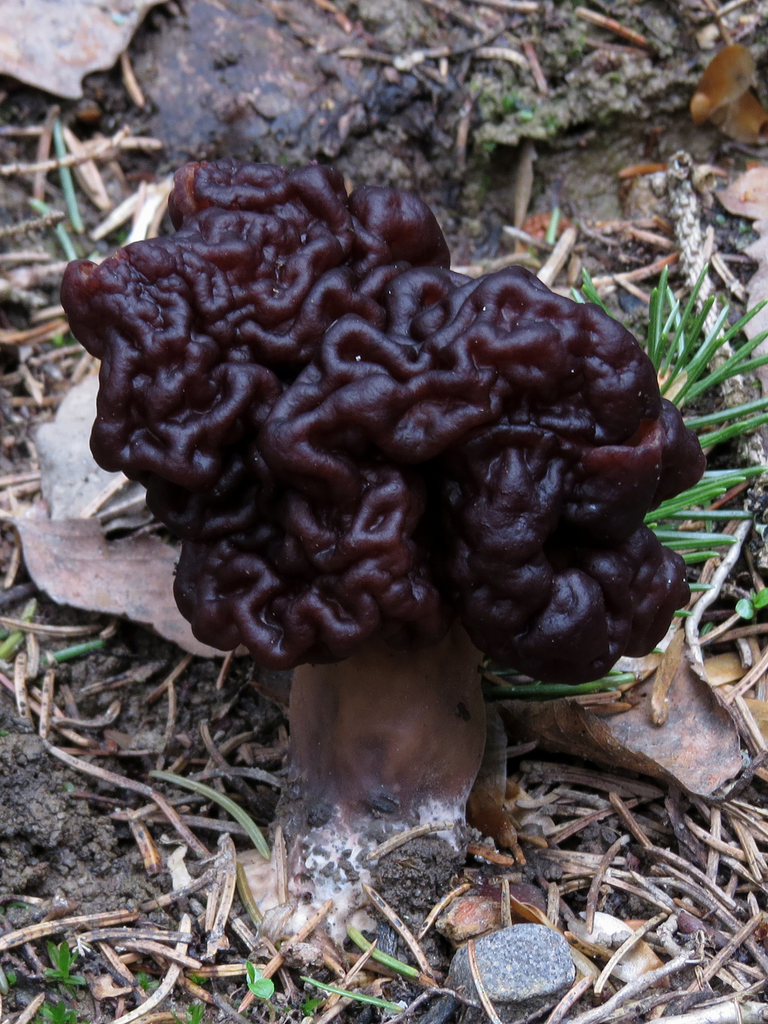
A brain-like, red-brown spring mushroom of sandy conifer woods. It contains gyromitrin, which the body converts to monomethylhydrazine, a component of rocket fuel. Despite this, Finland sells it with mandatory warnings and parboiling instructions as a traditional delicacy.
Gyromitra esculenta is an ascomycete fungus from the genus Gyromitra. The fruiting body, or mushroom, is an irregular brain-shaped cap, dark brown in colour, that can reach 10 centimetres high and 15 cm (6 in) wide, perched on a stout white stipe up to 6 cm high. It is widely distributed across Europe and North America, normally fruiting in sandy soils under coniferous trees in spring and early summer. Wikipedia
What it can do
- iContains gyromitrin, which breaks down to the toxin monomethylhydrazine (MMH)
- iiFumes from boiling can poison the cook
- iiiFruits in early spring, at the same time as true morels
- ivMMH is carcinogenic in animal studies, even in small repeated doses
At the table
Deadly when raw and dangerous even when prepared. Gyromitrin causes vomiting and diarrhoea, then liver damage, seizures and death. Finnish practice of boiling twice in fresh water with good ventilation reduces but does not reliably remove the toxin, and cumulative and carcinogenic risks remain. Do not eat. It is commonly mistaken for true morels (Morchella), which have a regular honeycomb of pits and are hollow throughout; the false morel has a brain-like, wrinkled cap and a chambered or cotton-filled interior.
Fruiting body & spores
Spores
Ascospores (not seeds) ellipsoid, smooth, with two oil droplets, about 17–22 × 7–10 µm, 8 per ascus; spore print whitish
- Dispersal
- Ascospores forcibly discharged from the cap surface
Where it lives
Recorded sightings
—
geo-referenced records in GBIF, from museums, herbaria and field observers.
Native range
Europe and North America, mainly in conifer forest on sandy soil
Drag the globe to turn it. Dots are where records exist, not a range map; darker means more records.
In the old herbals & bestiaries
No plate in the Source Library names this exact species, so these show its closest relatives as the old naturalists drew them: same genus, or the same kind of plant. Click a plate to read the page it came from, with translation.

Illustrations of Fungi which Grow in Bavaria and the Palatinate around Ratisbon, Vols 1–2
Relative · Jacob Christian Schaeffer; C.H. Persoon (ed.) · 1800 · p.334

Illustrations of Fungi which Grow in Bavaria and the Palatinate around Ratisbon, Vols 1–2
Relative · Jacob Christian Schaeffer; C.H. Persoon (ed.) · 1800 · p.337

Illustrations of Fungi which Grow in Bavaria and the Palatinate around Ratisbon, Vols 3–4
Relative · Jacob Christian Schaeffer; C.H. Persoon (ed.) · 1800 · p.200

Illustrations of Fungi which Grow in Bavaria and the Palatinate around Ratisbon, Vols 3–4
Relative · Jacob Christian Schaeffer; C.H. Persoon (ed.) · 1800 · p.217

Rariorum Plantarum Historia (with Fungorum Historia)
Relative · Carolus Clusius · 1601 · p.652

An History of Fungusses, growing about Halifax (Vols 1-2)
Relative · James Bolton · 1788 · p.326

Histoire des Champignons de la France, Vol 2
Relative · Pierre Bulliard · 1791 · p.215

On the Names of Plants
Relative · Hieronymus Bock (Tragus) · 1552 · p.1011
In the stacks
Searching the stacks…
Every page naming Gyromitra esculenta in the Biodiversity Heritage Library →
Marginalia
In Finland, korvasieni is sold fresh with warning labels and instructions for parboiling. It has also been eaten in parts of Sweden, the Pyrenees and Michigan. Many other European countries ban its sale.
Curiosity
Monomethylhydrazine, its breakdown product, was used as rocket fuel in the Space Shuttle's manoeuvring thrusters.
Kinship
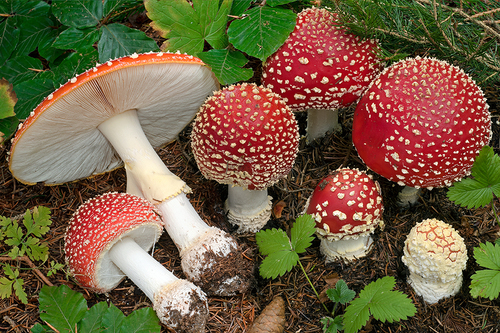
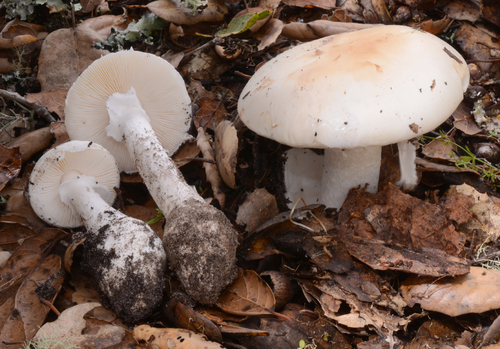
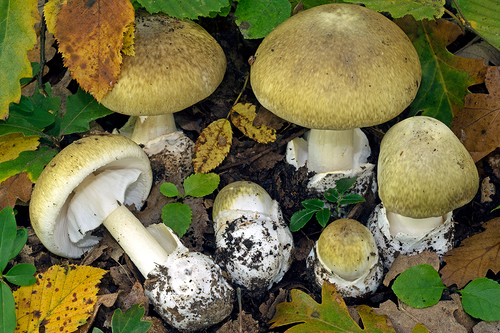

Photographs: iNaturalist contributors under the licences shown. Records: GBIF.org. Historical plates: Source Library (CC BY-SA 4.0; originals public domain). Summary text: Nature Library editors and Wikipedia (CC BY-SA). Medicinal and edibility notes are historical and educational, not advice. iNaturalist taxon 85120.